
STAR
Augmented Reality · Visualization · React · .NET · Unity · 2025
STAR: Scanning Tags in Augmented Reality
What is STAR?
STAR is a new Augmented Reality (AR) application that rethinks how cycle counts are performed in dynamic warehouses and retail environments. Traditional RFID cycle counting has lacked accurate, real-time spatial feedback, a gap STAR was built to close. The application is designed as a two-part system, delivering value to the operators running cycle counts on the floor and the managers responsible for reviewing coverage and accuracy afterward. Field operators wear an AR headset that provides live feedback as they scan, provided in the form of spatial holograms. A companion web dashboard uses the positional and temporal data collected during each run to let anyone verify results after the fact.
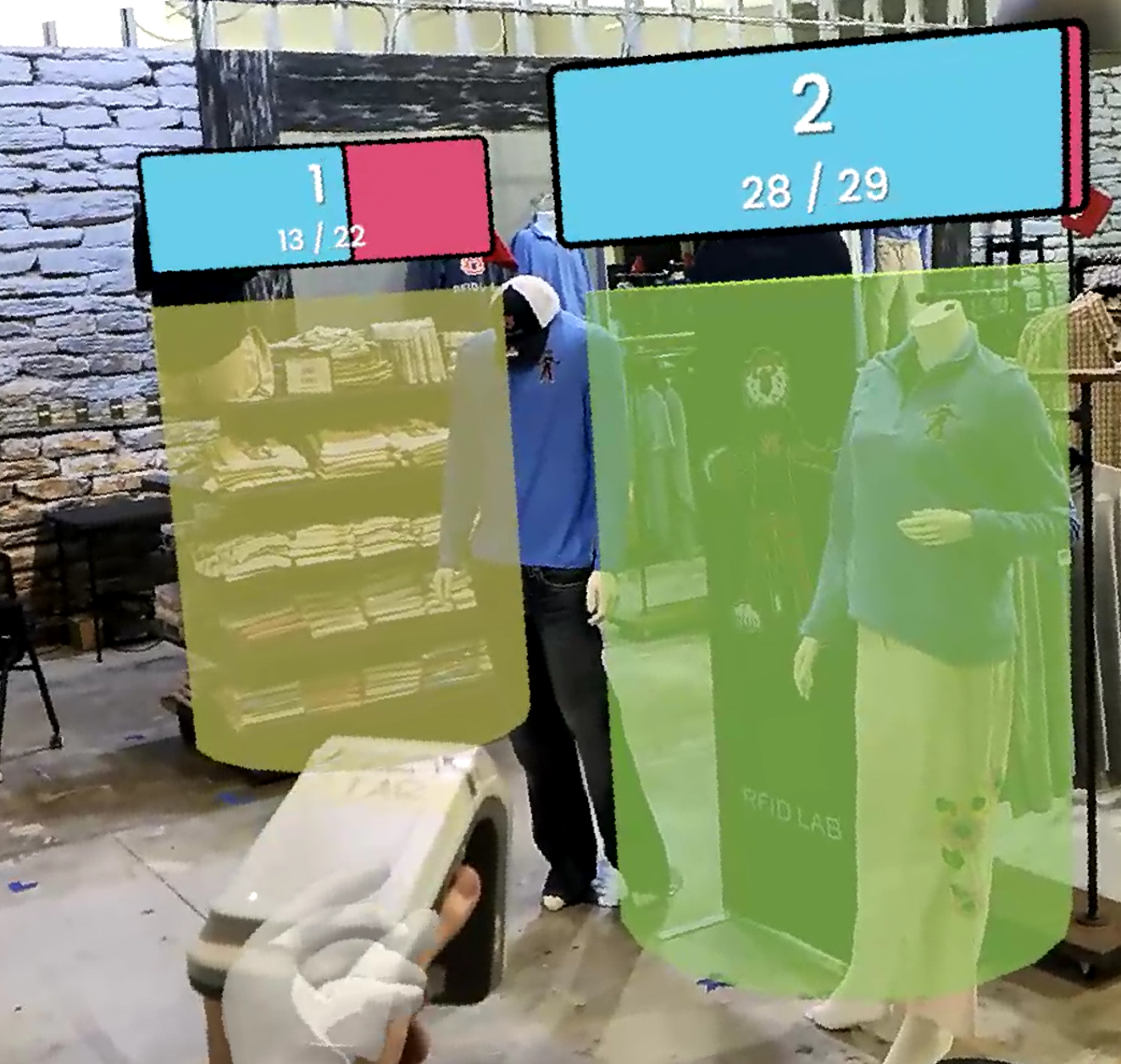
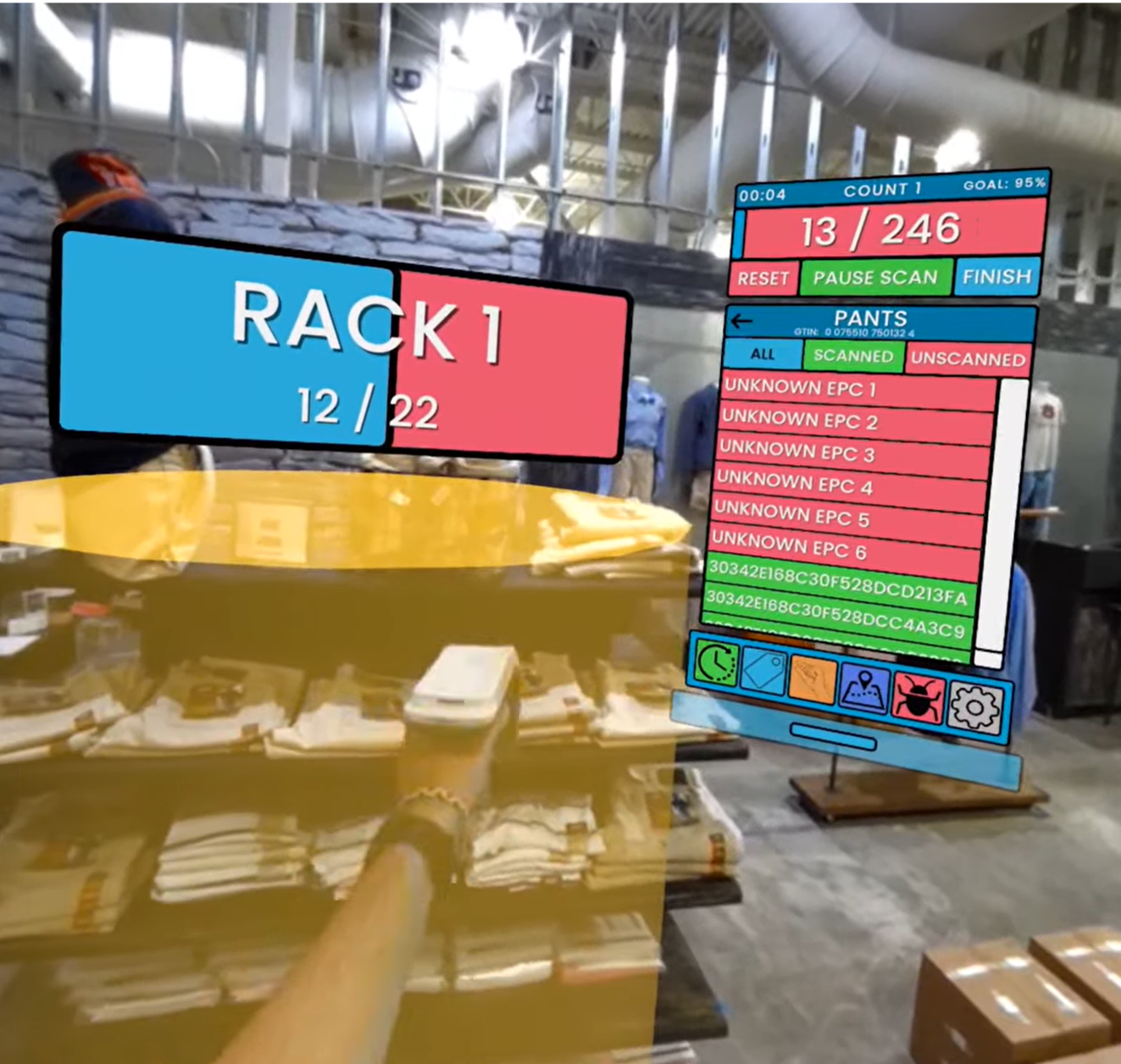
Visualized tag groups as holograms and the interface showing real time inventory updates
How does it work?
STAR pairs an AR headset with a web dashboard, streaming positional and temporal scan data between the two so that what an operator sees in the field and what a manager sees on screen stay in sync. This design has two main components:
-
AR Visual Feedback: A headset worn by the operator provides clear spatial holograms of tags in real time. This instant feedback allows operators to complete tasks more efficiently without guesswork. It also supports detailed views for locating specific items and can flag items that were missed.
-
Web Dashboard: Built to review runs after the fact, it turns the positional and temporal data collected during a scan into digestable analytics, coverage heatmaps, and path-traveled visualizations. The dashboard can even livestream the headset’s view for remote monitoring.

Web dashboard tracking the scanner’s path and real-time scan progress.
Key Features
- Inventory synchronization: Keeps scan data aligned with existing inventory records in real time.
- Cycle count data streaming and visualization: Captures and displays scan activity as it happens.
- Mod completion progress tracking: Shows operators and managers how much of a given area or module has been covered.
- Tag/MOD lookup and visual finder: Helps operators locate specific tags or modules directly in the field.
- Missed tag detection: Flags items that were not captured during a scan.
- Cycle count spatial analytics: Turns raw scan data into actionable, location-based insight.
- Coverage heatmaps: Visualizes scan density and gaps across a space.
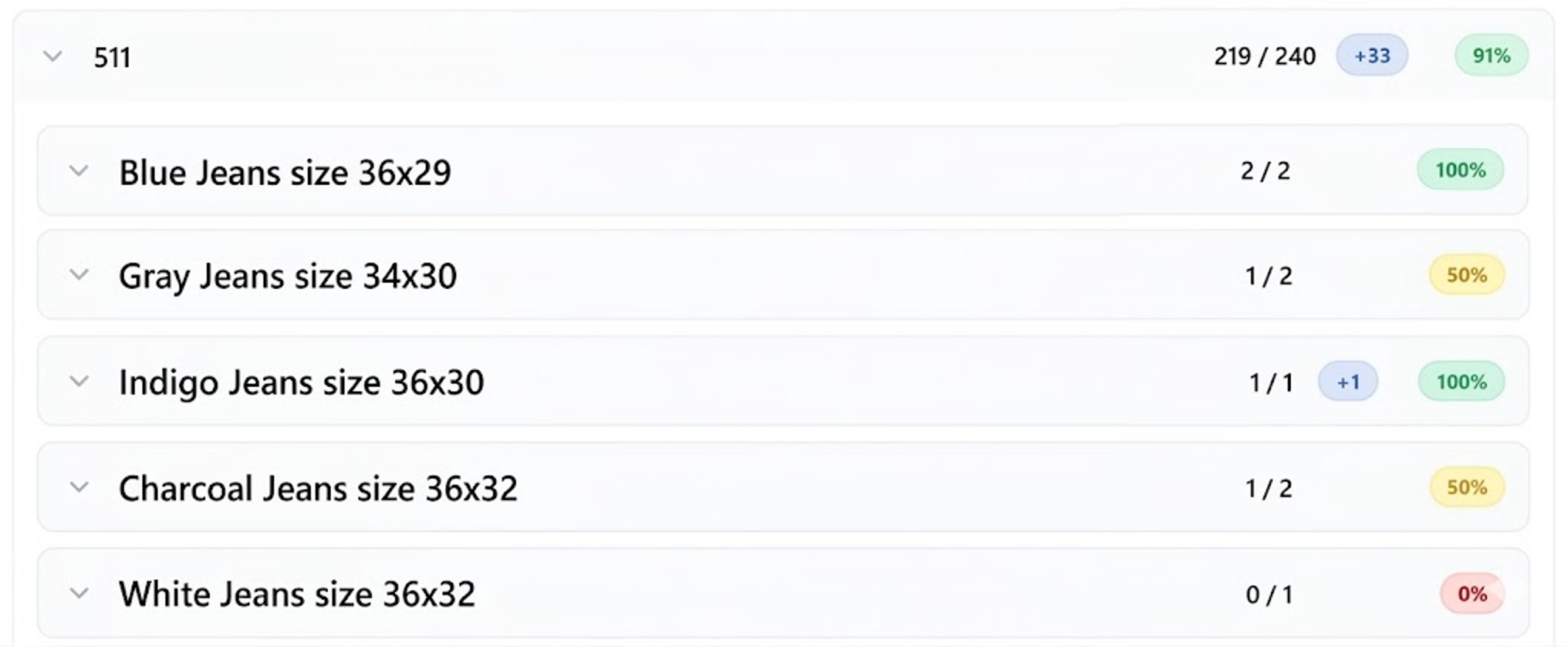
Web dashboard’s detailed view of products under one module.
How did STAR begin?
The project started almost by accident. During lab tours showcasing the team’s Virtual Reality (VR) cycle-count simulators, visitors kept asking whether the scanner was real and whether a mixed-reality version with an actual cycle-count interface could exist. Upon receiving sufficient inquiries, it was determined that the project must be initiated. STAR has since moved through several hardware generations. It began on Microsoft’s HoloLens 2, since discontinued, then moved to the Meta Quest Pro, which the team found lacking key industry features, before finally settling on the Magic Leap 2, a headset that has proven to be a strong match for the project.